
Beyond the Budget & Guest List
The conversations every couple should have at the start of the wedding planning process
Yay! You’re engaged! Now what?!?!
The wedding planning journey can feel daunting from the start. There are a hundred big decisions ahead, and a thousand tiny ones. It can feel overwhelming and unclear where to even begin.
If you ask a wedding planner, they will tell you to start with the budget, a logical first step when all the other big things hinge upon what you can actually afford, from the venue to the size of the guest list to whether you’ll be serving lobsters or hot dogs. The thinking being that you then have a foundation to make the other big decisions: the guest list, the style, the venue, the date, and continue from there. When you lead with the logistics, it makes practical sense to start with the who, what, where, when, and especially the how.
But as an experience designer I would argue that the true starting point should actually be the why.
A budget is meaningless without purpose and intention. You could spend the same amount of money on a luxury experience for 15 people as a streamlined, casual affair for 300 people. It just depends on your priorities. Before you start spending a single dollar/euro/pound you should really get clear on why you’re even having a wedding—and by that I don’t mean why are you getting married, because that can be handled without any fanfare at your local city hall if marriage were the only goal—but why it’s important to have a wedding. Weddings are expensive, they are time consuming to plan, can be stressful to execute, and they shine a light on every minor family squabble, unresolved friend dynamic, and deep-seated insecurity. In other words, the cost of planning a wedding might go beyond money, so the payoff should too.
The internet is full of articles about folks reckoning with their wedding regrets, such as this one, and this one, and the common denominator seems to be deep regret over getting so swept up in the details they completely lost sight of the sacredness of the occasion. Couples focus on the details at the expense of the bigger picture, and then when the details aren’t perfect it can feel like everything. If you’re not crystal clear on the deeper purpose of what you’re doing, you won’t know at the end if you did it right. A lot of couples are shocked to find out the meaning doesn’t make itself. It isn’t a given. For a lot of people there, it’s just a party.
Sitting down with your partner to talk about your individual, and collective, why can be a beautiful opportunity for connection, depth, and strengthening communication. But it can also be the launchpad for aligning on some important life issues, like your expectations for married life, how to handle family dynamics during the wedding, and how you imagine your partnership evolving.
These questions are pulled directly from my client questionnaire, the starting point of the experience design process. But simply having these conversations as a couple will already set a foundation for planning a more authentic, honest, and meaningful wedding.
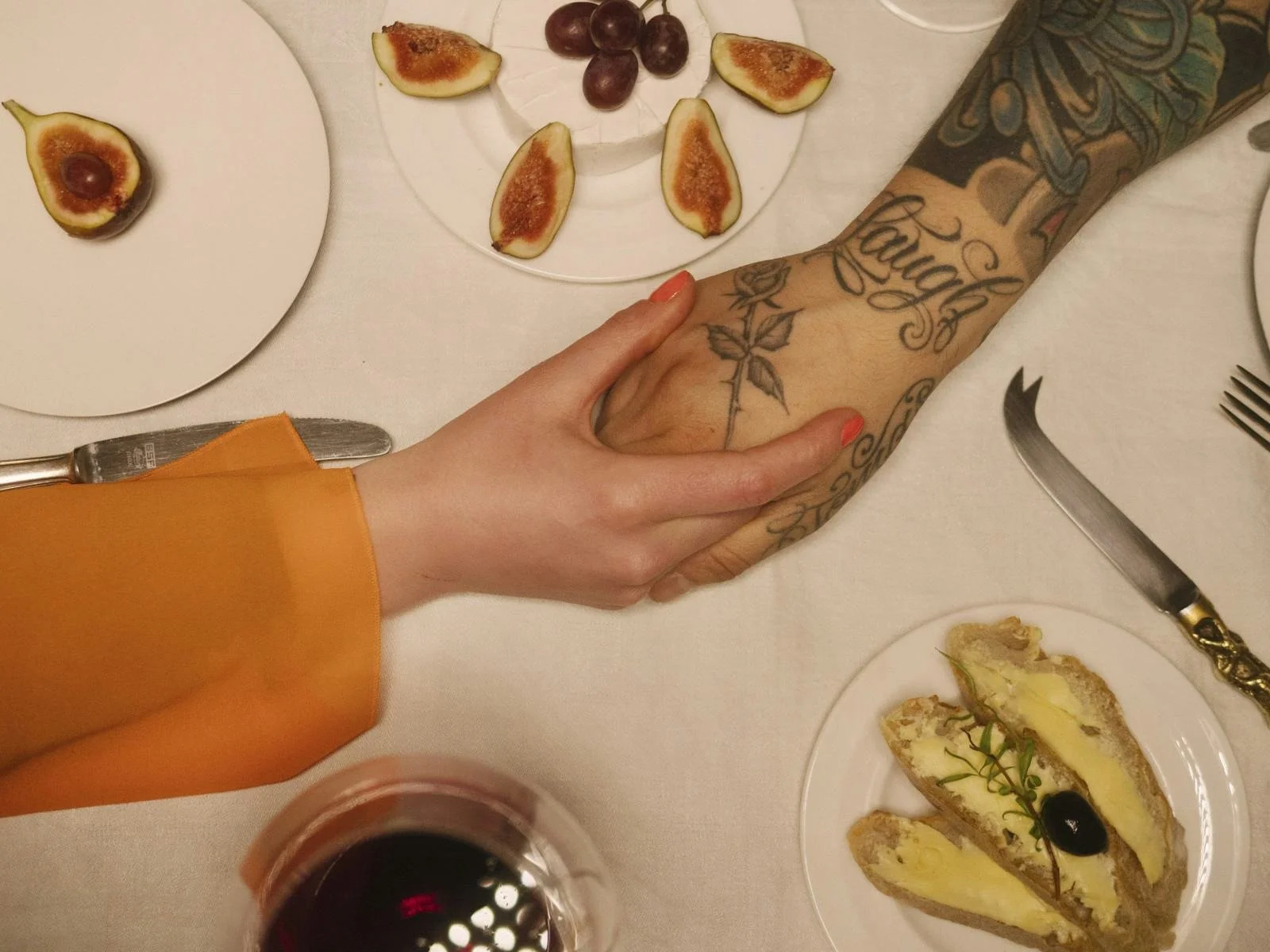
Photo from Death by Stock
Put on some chill music, turn off your phones, maybe pour yourselves a glass of wine, and dive in:
Why is it important for us to have a wedding? What emotional or symbolic need does it fulfill?
Beyond logistics or tradition, why does having a wedding matter to you? Is it about being witnessed in your commitment? Creating a moment of belonging for your community? Honoring family, culture, or spirituality? Or maybe it’s a way to mark a transition, start a new chapter, or celebrate the life you’ve built together. Try to name the deeper emotional or symbolic need this wedding is fulfilling for you both.
If we had to describe the true purpose of this wedding in one sentence, what would it be?
While a wedding's function is to get married, its purpose is about the collective meaning that's being created. What’s at the heart of it all? Is it about celebrating love, uniting families, creating joy, honoring your journey, or something else entirely? Think of it like a mission statement for your wedding, the core purpose that everything else should reflect. There is no right or wrong wedding purpose, but it should be clearly defined because it guides a lot of the other decisions (like who to invite). Here is an example from a recent client: After some challenging years, it means so much to us to celebrate the good moments by bringing our closest people together in our favorite place, surrounded by the music, food, and wine we love most.
What would make our wedding feel deeply meaningful to us? To the people we love?
Is it hearing personal vows, having a quiet moment alone together, or being surrounded by everyone who’s supported you? Would it feel meaningful to include a family tradition, acknowledge loved ones who can’t be there, or blend elements from your cultures or backgrounds? For your guests, is it about feeling welcomed, sharing in your story, or being part of something heartfelt and unique? Think about what would make you and your community walk away thinking, “That really meant something.”
Who are the people we need to be there for the wedding to feel whole?
What does their presence represent to us? What will it mean for us if they don’t come? Can we honor these people in some way, even if they can’t be there?
Are there any guests we’re considering inviting whose presence might create tension or conflict?
Is there unresolved history, strained relationships, or potential for drama? Identifying this early helps you plan with care, set boundaries, or create support strategies to protect your peace on the day.
What does our community expect from this wedding? How can we either exceed or meaningfully shift those expectations?
Think about the expectations your families, cultures, or communities might have, whether that’s about tradition, formality, who’s invited, or what the day should look or feel like. Are there rituals or norms people assume you’ll follow, or ones they think you will flat out reject? Knowing you, will they expect something understated, or over-the-top? People tend to remember experiences based on how they compare to our expectations. While some expectations you may want to honor, are there ones you can exceed with a fresh take, or gently shift to reflect your values and relationship more authentically?
What role does this wedding play in the story of our relationship and the communities we are part of?
Is this wedding a turning point, a celebration of making it through something big, or a long-awaited gathering after distance or time apart? Is it about merging cultures, honoring a shared faith, or creating new traditions? How might it shape your identity as a couple in the eyes of your families or communities? Think about the emotional or symbolic weight it carries, both for you and for the people who will be there.
What do we want guests to remember most about our wedding? What story do we want them to retell afterward? What lasting feeling do we want guests to carry with them when they think back on our wedding?
As mentioned before, people remember experiences based on how they compare to our expectations. That can be positive or negative, often people remember when something goes horribly wrong, so we want to ensure your wedding is memorable by design, not disaster. Even if your wedding is beautiful, if they expect it to be beautiful, there won't be much to say about it. Think in superlatives here. Do you want them to say it was the wildest wedding they ever attended? The most moving? What memory or moment do you want to stick with them long after it's over?
What pain points or discomforts might guests experience (logistics, social anxiety, accessibility, etc.), and how can we help ease them?
Some of these might be universal, and some might be more personal. For example if you’re planning a summer wedding, the heat might be a pain point that affects everyone, whereas a more personal concern is making sure individuals with dietary restrictions are accommodated during the meal. Write down everything you can think of. Maybe you have a particularly introverted group of friends you worry about socializing, or a group who are traveling from far away. While you can’t accommodate every need, removing friction where possible really impacts guest experience.
Photo from Death by Stock
Once you have the answers to these questions and are clear on the impact you want this wedding to have, both on the two of you, as well as your family and friends, you can revisit the big logistical questions with more purpose and clarity. Perhaps you’re rethinking whether you actually want the big wedding you always imagined, whereas something more intimate feels more aligned right now. Maybe you planned to go all out on your dress when it feels more meaningful to splurge on guest gifts or live music.
Your answers can act as a compass for the entire planning process, a path to adhere to to avoid getting sidetracked with unnecessary details that pad the budget without adding any meaning. But these conversations are just the first step toward a more soulful and purposeful wedding that will sticks to the bones, even when not every detail is perfect.
If you’d like support bringing your wedding vision to life, I’d love to help. You can schedule a complimentary call with me to chat about planning a wedding that’s emotionally unforgettable and truly you.
